
Deep Delves and Dark Suits: A Review of Torchlit
Disclaimer: A review copy of Torchlit was provided by Allplay for review purposes. No money was exchanged or asked for, and all opinions expressed in this review are strictly my own.
Torchlit (designed by David Spalinski and published by Allplay) reinvents traditional card play by meshing classic trick-taking mechanics with positional movement, secret bidding, and dynamic dungeon-building. Plays in 30–45 minutes for 2 to 5 players, Torchlit subverts traditional trick-takers by making low cards just as powerful as game-winning trumps.
How to Play: Delving the Dungeon
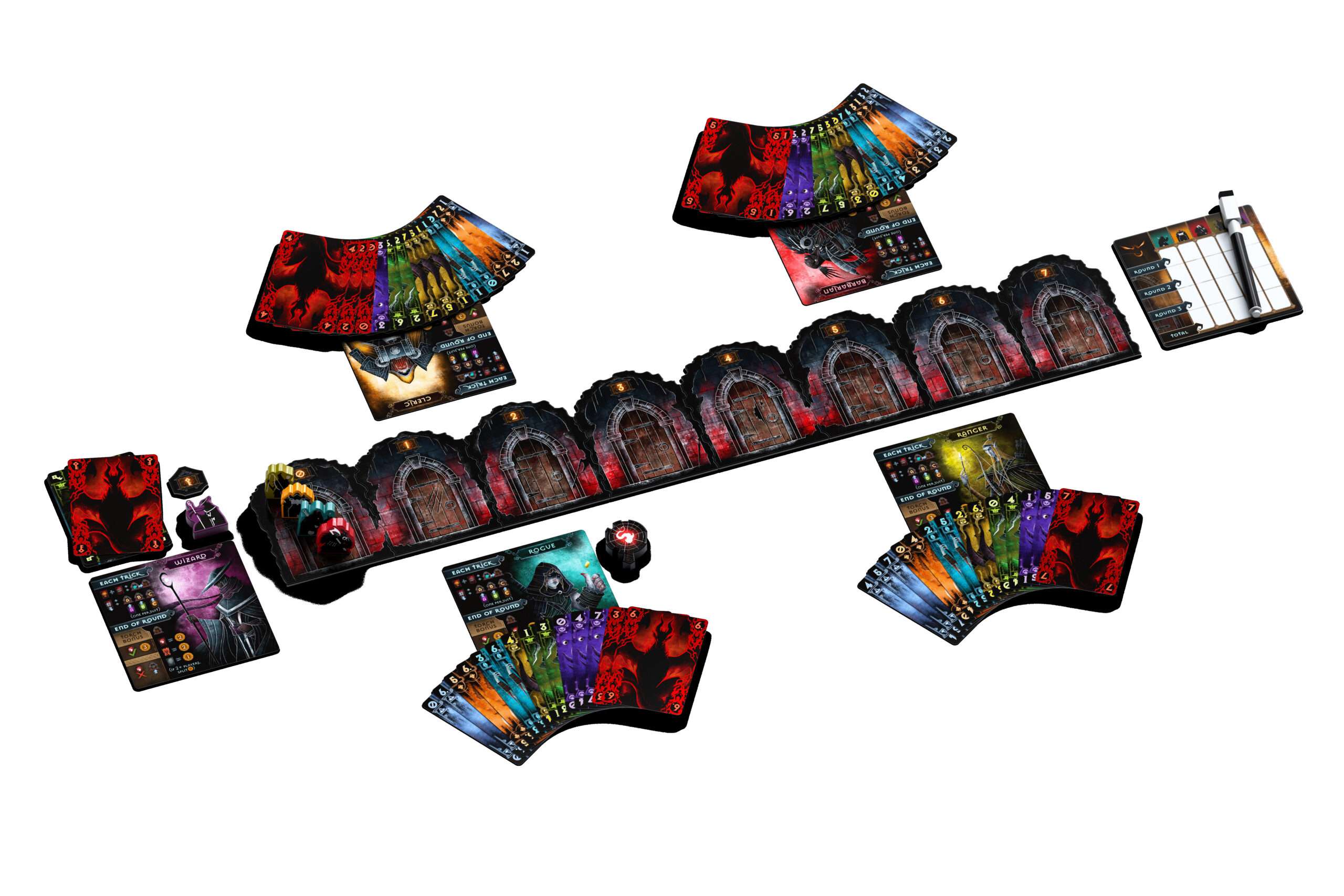
The deck consists of 56 Monster Cards ranked 0 through 7 across 7 distinct suits, with the red Dragon suit serving as trump. Eight Door Tiles (numbered 0 to 7) are arranged in ascending order in the center of the table. A full game lasts 3 rounds. Each round consists of three phases:
1. Light Torches
At the start of a round, every player sets aside 1 card face-down from their hand as their Torch. The rank (0–7) of this hidden card designates your secret target door—the dungeon room you are aiming to reach by the end of the round to claim a bonus.
2. Play Tricks
Players follow classic trick-taking rules:
-
The Torchbearer leads a card.
-
Going clockwise, players must follow suit if able. If out of suit, they may play any card, including trump.
-
Winning a Trick: The highest-ranked card of the lead suit wins, unless a Dragon (trump) card was played, in which case the highest trump card wins.
What Makes Torchlit Different:
-
Movement: The winner of the trick AND any player who played a card of the same numerical rank as the winner advance their meeple 1 door to the right. (If you step off Door 7, you loop back to Door 0).
-
The New Torchbearer (Dungeon Warden): Whichever player plays the lowest numerical rank in the trick—regardless of suit—becomes the new Torchbearer and leads the next trick.
-
Seeding the Dungeon: The new Torchbearer selects 1 card of each suit played in that trick and places them face-up underneath the matching door number. Unselected cards are discarded.
3. Enter Dungeon & Scoring
After all tricks are played, players reveal their Torches:
-
Defeat Monsters & Claim Gold: You score gold for the door room you land on:
-
2 Gold per face-down Torch card
-
2 Gold per face-up Dragon (trump) card
-
1 Gold per face-up standard monster card
-
-
Splitting Loot: If you are alone on a door, you claim all gold. If multiple players land on the same door, the total gold value of that room is split equally between them (rounding down).
The Highlight Feature: The Dark Fantasy Artwork
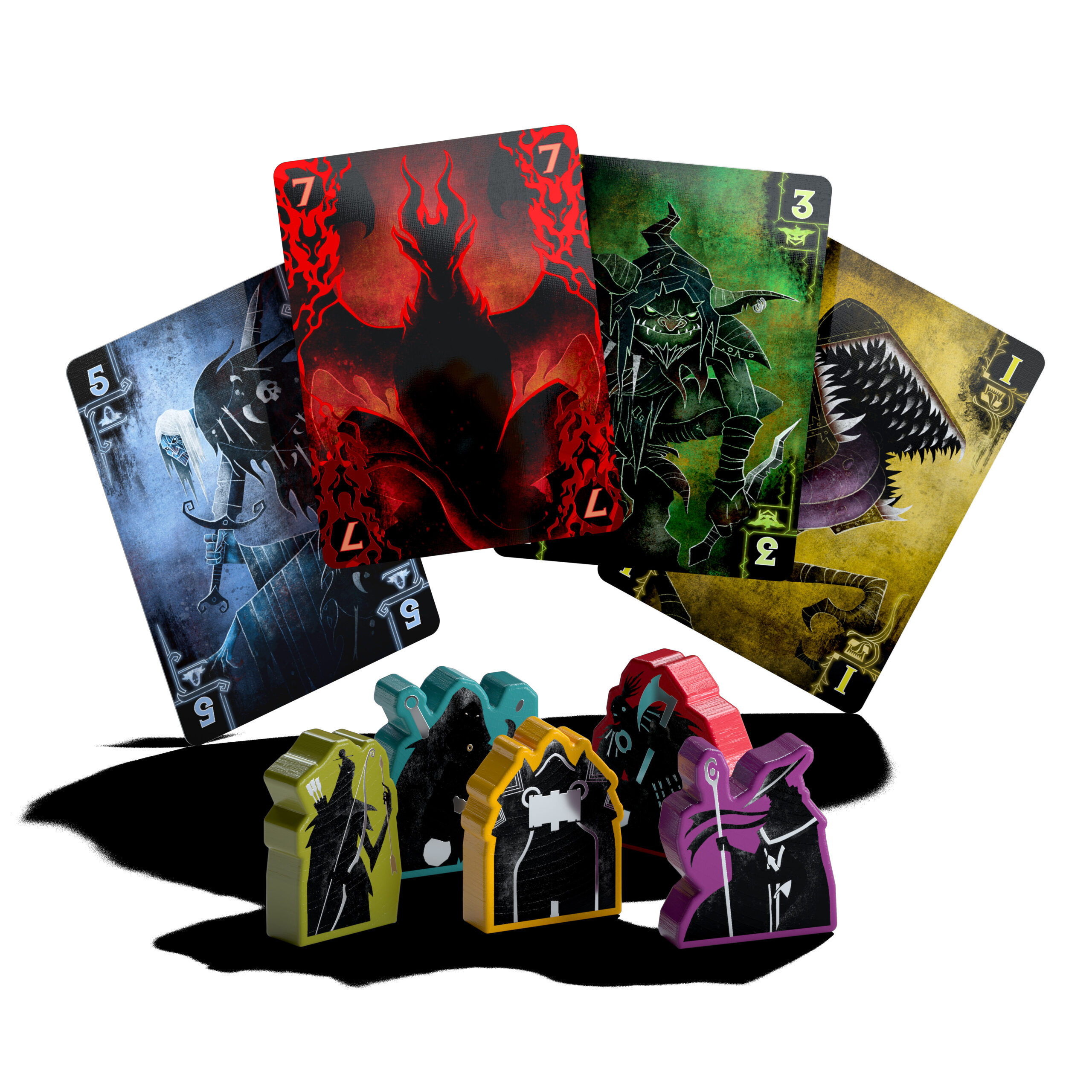
The standout visual feature of Torchlit is its artwork, illustrated by Harry Conway (known for Veiled Fate) with contribution from Phil Rynda and David Spalinski.
Rather than standard playing card pips or lighthearted cartoon illustrations, Torchlit leans into a shadowy, gritty, dark fantasy aesthetic. The cards depict grotesque, high-detail monsters—goblins, armored horrors, skeletal fiends, and winged dragons—rendered with heavy, scratchy ink linework and atmospheric, high-contrast coloring.
The full-bleed monster art creates a claustrophobic, dungeon-delving atmosphere right on the table. Because players constantly inspect cards underneath door tiles to tally potential loot, the visual clarity of the suits combined with the detailed illustrations makes the dungeon feel alive—and dangerous.
Pros and Cons
Pros
-
Meaningful Low Cards: Playing low cards lets you manipulate room values and seize control of the next trick.
-
Striking Presentation: Harry Conway’s dark artwork and foil-accented packaging elevate the game’s table presence.
-
Clever Bidding Twist: Secretly choosing a target door via your Torch card creates an engaging mix of hidden objectives and push-your-luck movement.
Cons
-
Punishing Miscalculations: Over-shooting a target door or sharing a room with opponents can slash your point total significantly.
-
Abstract Theme: Despite the monster artwork, the game is ultimately an analytical math and trick-counting exercise.
Final Verdict
Torchlit successfully bridges classic card-game mechanics with dungeon crawling themes. Thanks to its stunning monster art, clever dual-incentive trick structure (where low cards control points and high cards control movement), and fast playtime, it is a standout card game for both casual tables and seasoned trick-taking enthusiasts, Though I feel as if you would enjoy it more if you were a trick-taking enthusiast.
Order your copy via Allplay or your FLGS
Discover more from DDO Players
Subscribe to get the latest posts sent to your email.


Leave a Comment