

Disclosure
A review copy of Codenames: Critical Role Adventures was provided by CGE for the purposes of review. No money, sponsorship, or other compensation was exchanged for this coverage. All opinions expressed in this review are entirely my own and are based on my experience with the game.
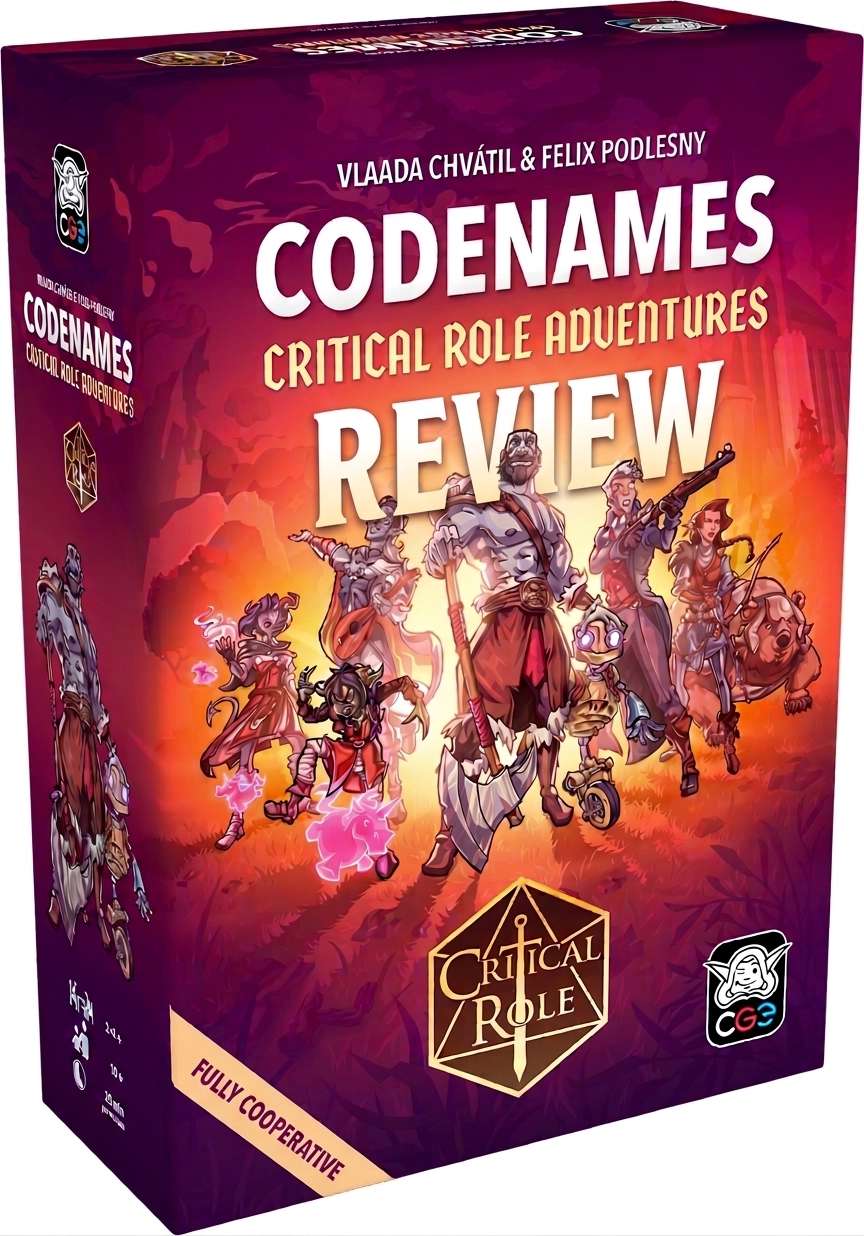
Codenames has seen more versions and spin-offs than I can count at this point, but Codenames: Critical Role Adventures might be one of the most ambitious. Instead of simply giving the game a Critical Role coat of paint, CGE has turned it into a cooperative campaign experience complete with heroes, equipment, leveling, branching paths, and a continuing story that takes place across the world of Exandria.
The result is still undeniably Codenames, but it’s also something that feels surprisingly different from the original game.
How It Plays
Players work through a series of connected missions spread across three different campaigns. One player takes on the role of the GM while everyone else controls a party of heroes drawn from Critical Role’s first three campaigns.
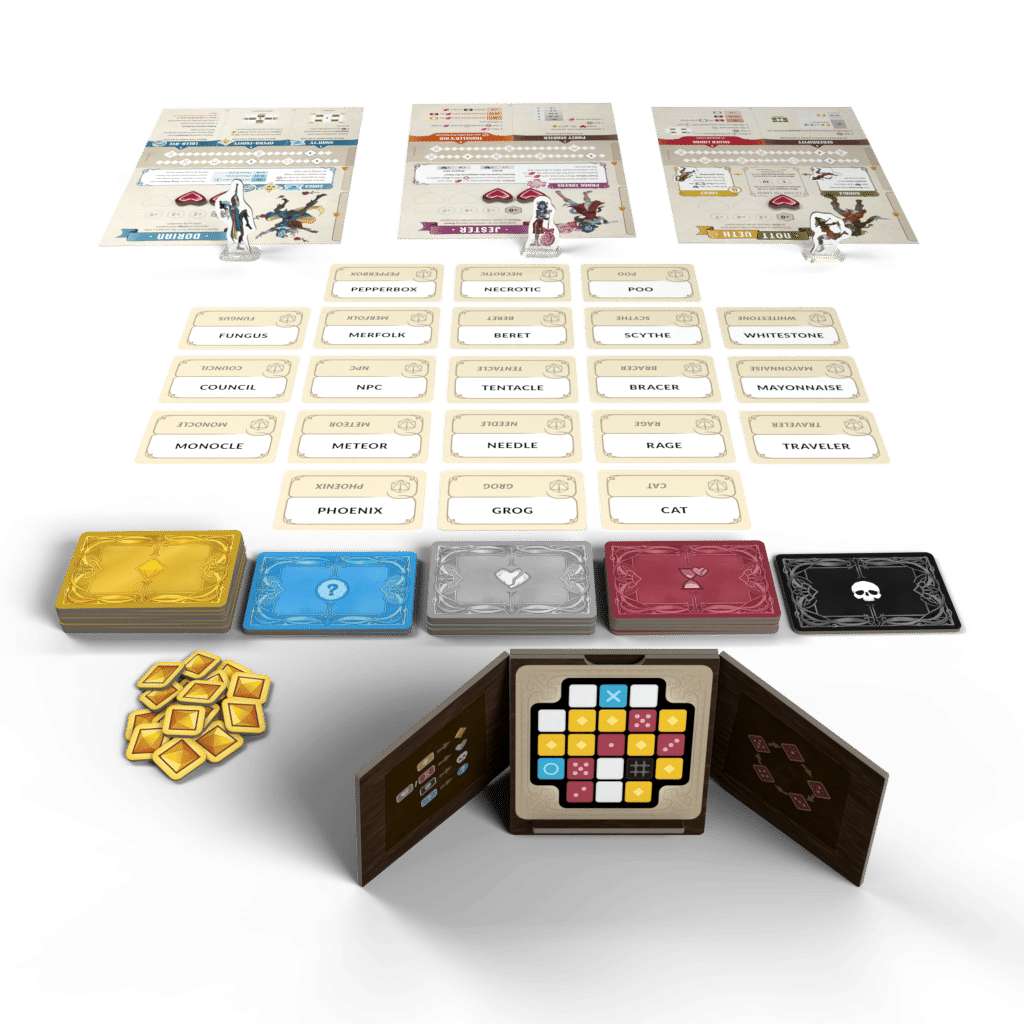
Like traditional Codenames, the GM gives a one-word clue and a number while the team attempts to identify the correct words on the table. The biggest difference is that there is no competing team. Instead, the entire group is working together to complete mission objectives before time runs out.
Each mission introduces its own objectives, special rules, and rewards. Some words are worth experience, others provide special bonuses, while incorrect guesses can cause damage to heroes or accelerate the mission timer. And, of course, there is still that one instant-loss word lurking somewhere in the grid.
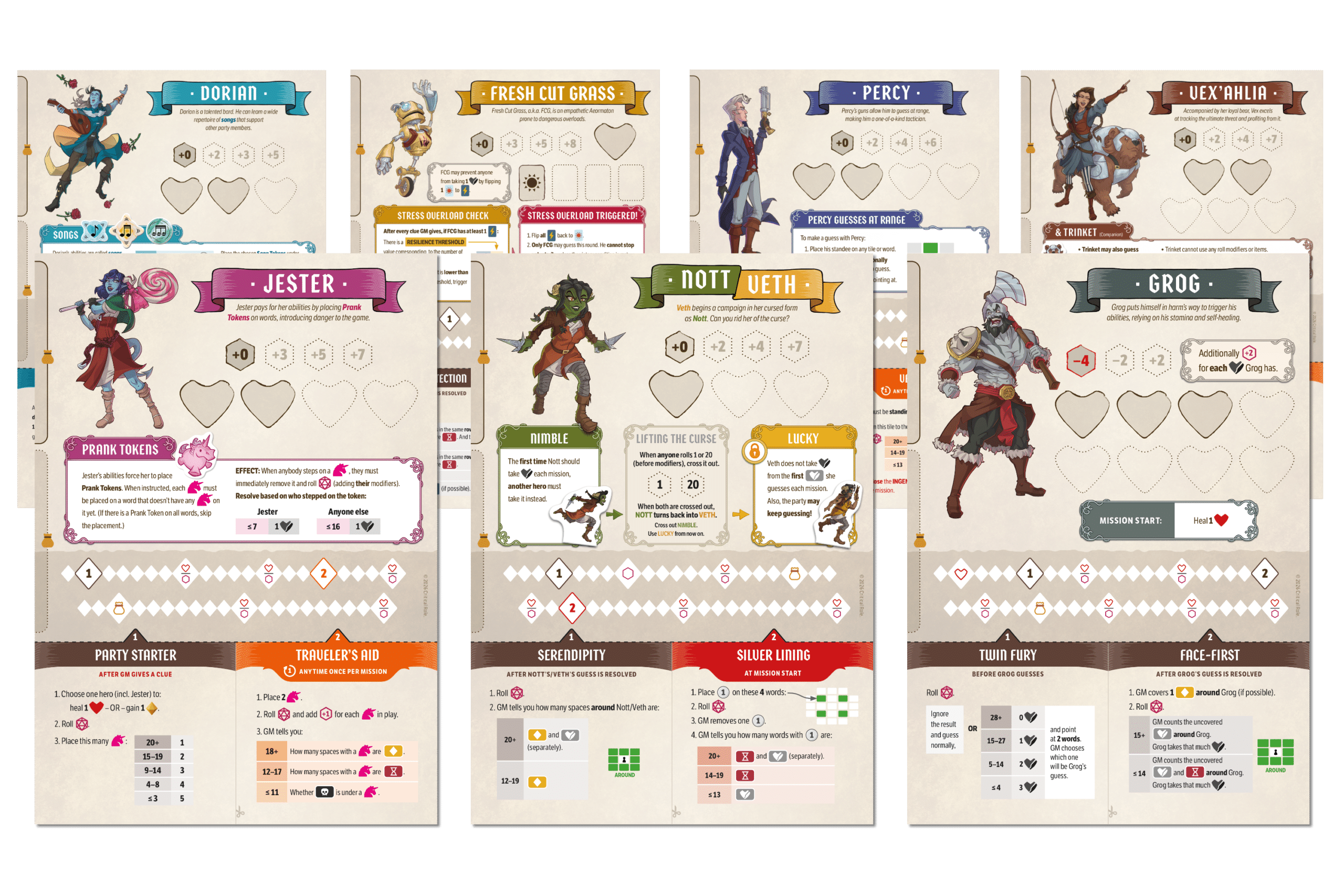
Between missions, heroes gain experience, unlock abilities, purchase items, and continue their journey across a branching campaign map. The RPG elements aren’t particularly deep, but they do create a sense of progression that carries from one scenario to the next.
What Works
The biggest success here is that the campaign framework actually changes how you think about Codenames.
In the original game, speed is usually the priority. You’re trying to communicate as much information as possible while avoiding disaster. Here, the focus shifts toward efficiency and risk management. Most missions require finding a specific number of target words rather than simply clearing the board. Because of that, every guess feels more deliberate.
Do you spend extra turns chasing bonus rewards? Do you play conservatively and focus only on the words you need? How much risk are you willing to take with a clue?
Those decisions add more texture than I expected.
I also appreciated the hero abilities. None of them fundamentally change the game, but they offer enough variation to make different character combinations feel distinct. The progression system is similarly light but effective. Leveling up heroes and adding equipment gives players something to look forward to between missions without bogging the game down in bookkeeping.
For people who enjoy campaign-style games, this structure works well because it gives context to what would otherwise be a series of disconnected rounds of Codenames. You’re still playing a word game, but now there’s a reason to care about what happens from one mission to the next.
The branching campaign maps also help replayability. Different routes lead to different missions, and while the underlying gameplay remains familiar, there’s enough variation that replaying a campaign doesn’t feel completely repetitive.
A Few Things I Didn’t Love
After playing through multiple campaigns, I’ve found that player count matters more here than it does in standard Codenames.
My least favorite way to play is actually with four players.
In theory, having four people should create more discussion and more opportunities for teamwork. In practice, what tends to happen is that each player starts informally claiming ownership over a particular hero. Since some heroes naturally end up being more useful in specific situations, experience points can become concentrated on one or two characters. Before long, somebody is playing the superstar hero while someone else is stuck with the least-developed character.
In groups of two or three, that dynamic largely disappears because players are naturally sharing responsibility for all three heroes. Our group has also enjoyed rotating the GM role periodically instead of assigning it to one person for an entire campaign. Doing so makes everyone feel more involved and keeps the game feeling truly cooperative.
I also have mixed feelings about the word deck.
If you’re heavily invested in Critical Role or fantasy RPGs, you’ll probably enjoy the thematic vocabulary. The game does a nice job reinforcing the setting through its words.
If you’re not particularly invested in the theme, however, some of the terminology can feel limiting. Words like Natural 20, Faun, and Sun Tree certainly fit the setting, but they don’t always lead to the most interesting clue-giving opportunities. At some point, I could see myself trying the campaign system with the original Codenames word cards instead.
That won’t be an issue for every group, but it’s something worth considering if your players aren’t deeply familiar with fantasy settings.
Final Thoughts
At the end of the day, Codenames: Critical Role Adventures succeeds because it doesn’t lose sight of what makes Codenames fun in the first place.
The clue discussions are still entertaining. The debates over possible answers are still great. The moments where everyone suddenly realizes what the clue-giver was trying to communicate are still as satisfying as ever.
The campaign elements, hero progression, equipment, and branching story paths don’t reinvent the game, but they provide enough structure and variation to make playing six or seven games in a row feel fresh rather than repetitive.
Will this replace traditional Codenames for me? Probably not.
But if you already enjoy Codenames and want a version that provides a little more continuity, progression, and cooperation, this is an easy recommendation. The RPG-inspired additions add just enough substance without getting in the way of the word game at the heart of the experience, and that’s exactly what I was hoping for.
Discover more from DDO Players
Subscribe to get the latest posts sent to your email.