

Disclaimer: I purchased this book with my own money and was not provided a review copy by the Hasbro/WOTC. The following review reflects my honest, unbiased opinion.
Title: Lost in a Purple Fog of Disappointment: Why “The Horrors Within” Fails to Deliver
Ravenloft: The Horrors Within promises to be the definitive guide to the darkest corners of gothic and cosmic dread, but unfortunately, the only real horror here is the book’s execution. While it attempts to bridge iconic vampire lore with cosmic entities, it ultimately stumbles over a disastrous visual aesthetic, uninspired mechanical design, and a frustrating lack of original identity.
A Pale Redux of Van Richten’s Guide
It takes less than ten pages to realize that The Horrors Within is essentially a lazy rehash of Van Richten’s Guide to Ravenloft. The structural DNA of the book is nearly identical, copying everything from the layout design down to the general narrative tone. It heavily recycles concepts like line of succession in horror, building tension, and the nature of the Dark Powers without adding anything meaningful to the conversation.
To be completely honest, there is very little here that separates it from its predecessor. If you already own Van Richten’s Guide, you have already read 80% of this book. What is technically different boils down to just a few specific elements:
-
A Shift Toward Cosmic Horror: While Van Richten’s touched on different horror genres (slasher, body horror, folk horror), The Horrors Within tries to pivot hard into cosmic, Lovecraftian dread—hence the clumsy addition of Cthulhu-centric cults and alien entity lore.
-
The Specific Stat Blocks: Van Richten’s purposely leaned away from giving definitive, high-challenge-rating stat blocks for every singular Darklord to keep them customizable. The Horrors Within tries to fix this by offering dedicated blocks for names like Strahd and Cthulhu—though, as we’ll get into, that “fix” is an absolute disaster.
-
A Handful of New Domains: There are a couple of new, cosmic-focused domains sprinkled into the geography section, though they feel more like brief magazine articles than fully realized settings.
Aside from those minor pivots, it feels less like a new supplement and more like an expensive, poorly edited director’s cut of a book you already bought.
Visual Disaster: A Sea of Monochromatic Purple
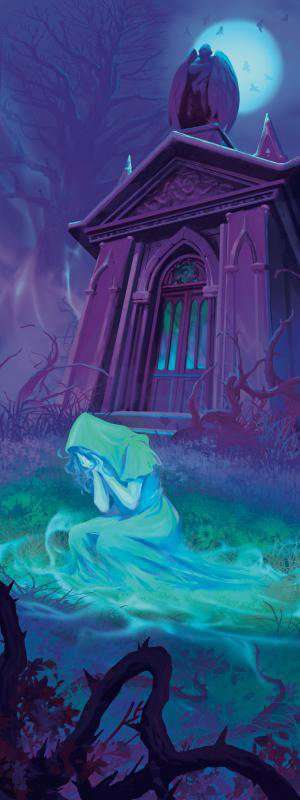
The lack of original identity is made worse by the interior visual presentation, which is a massive letdown from the very first page. Instead of evoking a haunting sense of dread, ancient decay, or dark majesty, the artwork feels incredibly rushed and cheap.
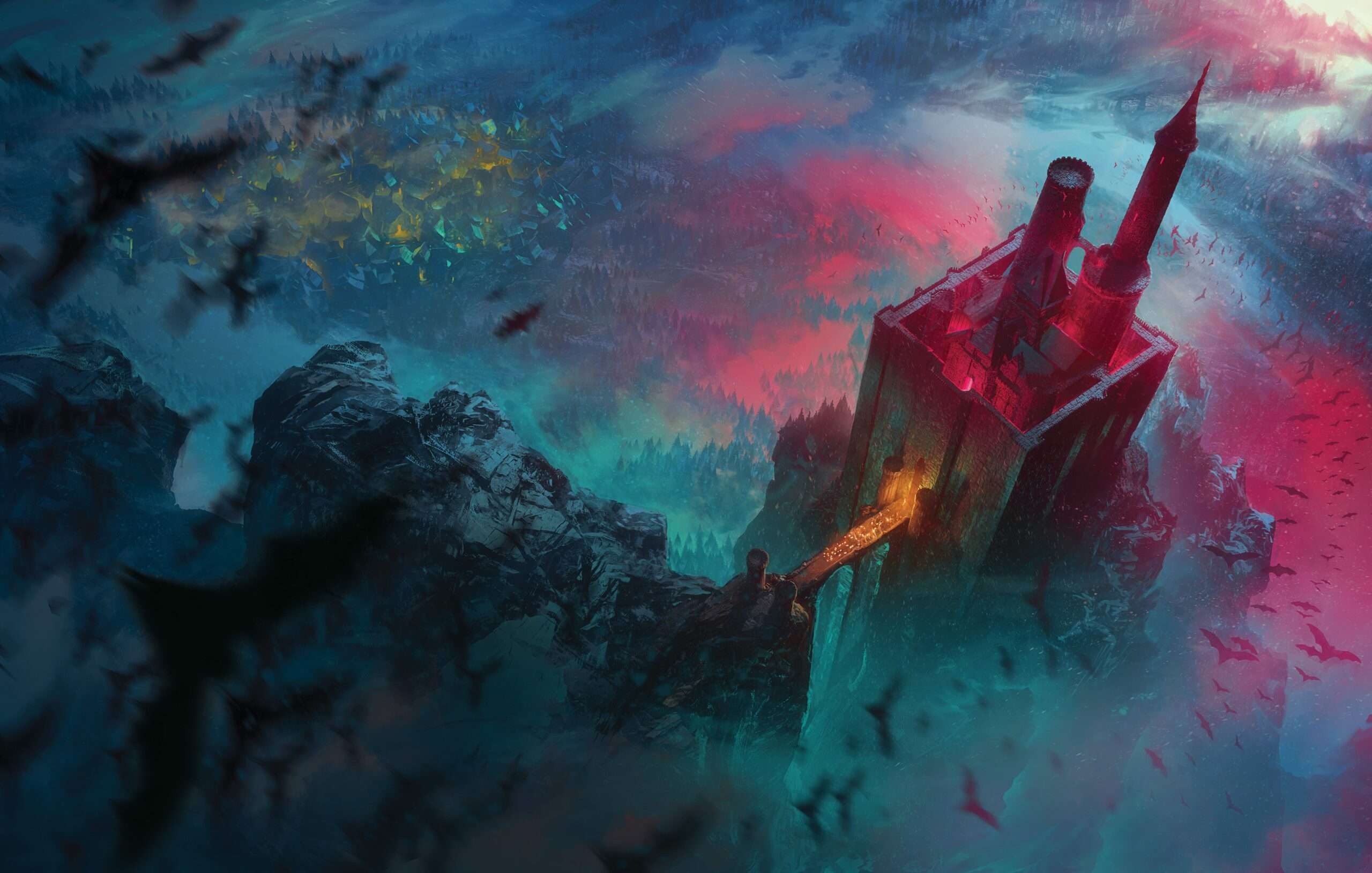
The biggest culprit is the color palette. The art team inexplicably decided to saturate nearly every single interior illustration in endless shades of purple. You will wade through garish neon purples, muddy violets, and washed-out plummy tones that cover everything from the landscapes to the character garments. Instead of establishing a moody atmosphere, this bizarre color choice completely flattens the depth of the illustrations and ruins the gothic ambiance. It feels less like a terrifying realm of shadows and more like a poorly rendered, neon-soaked retro video game level.
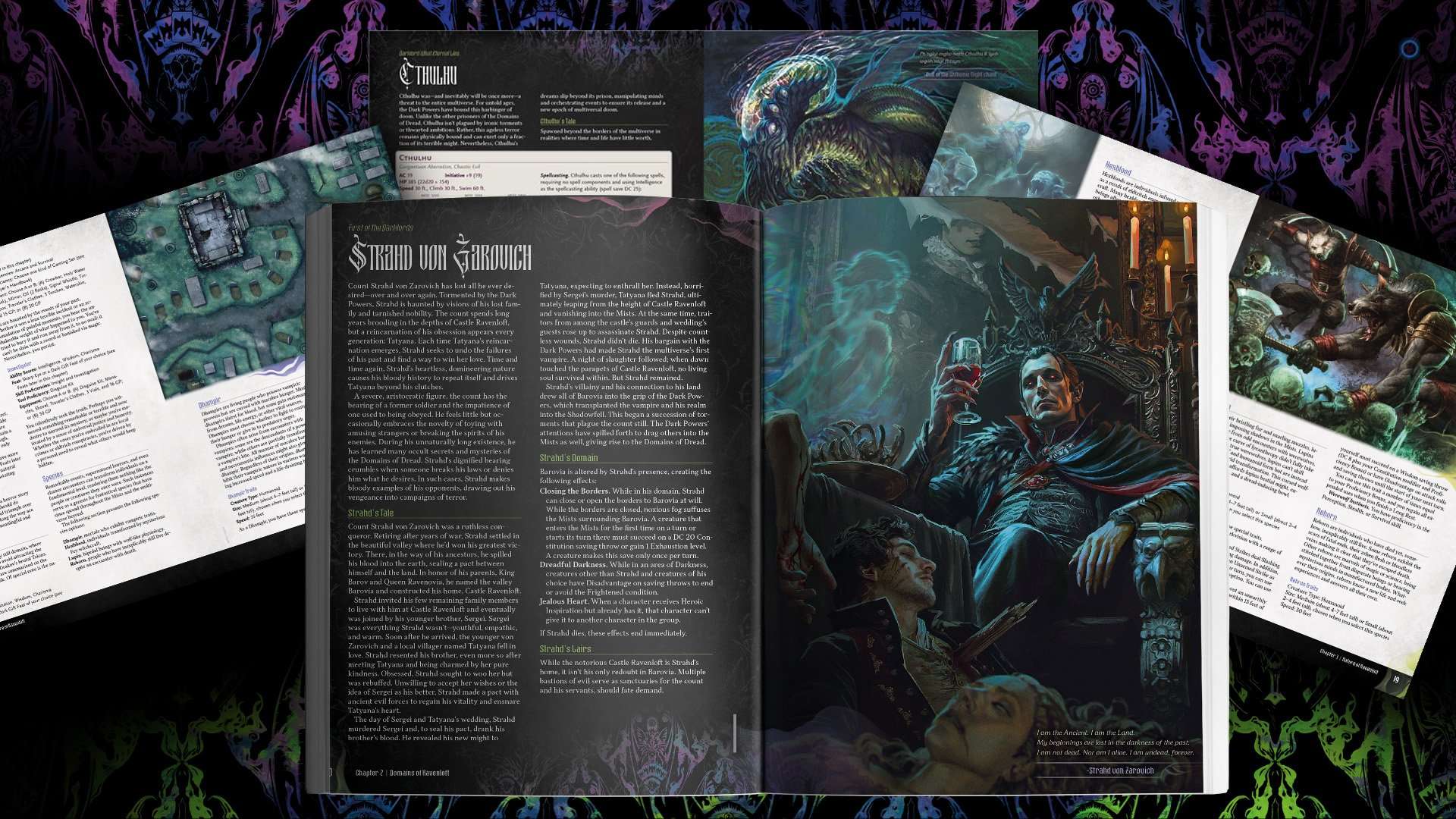
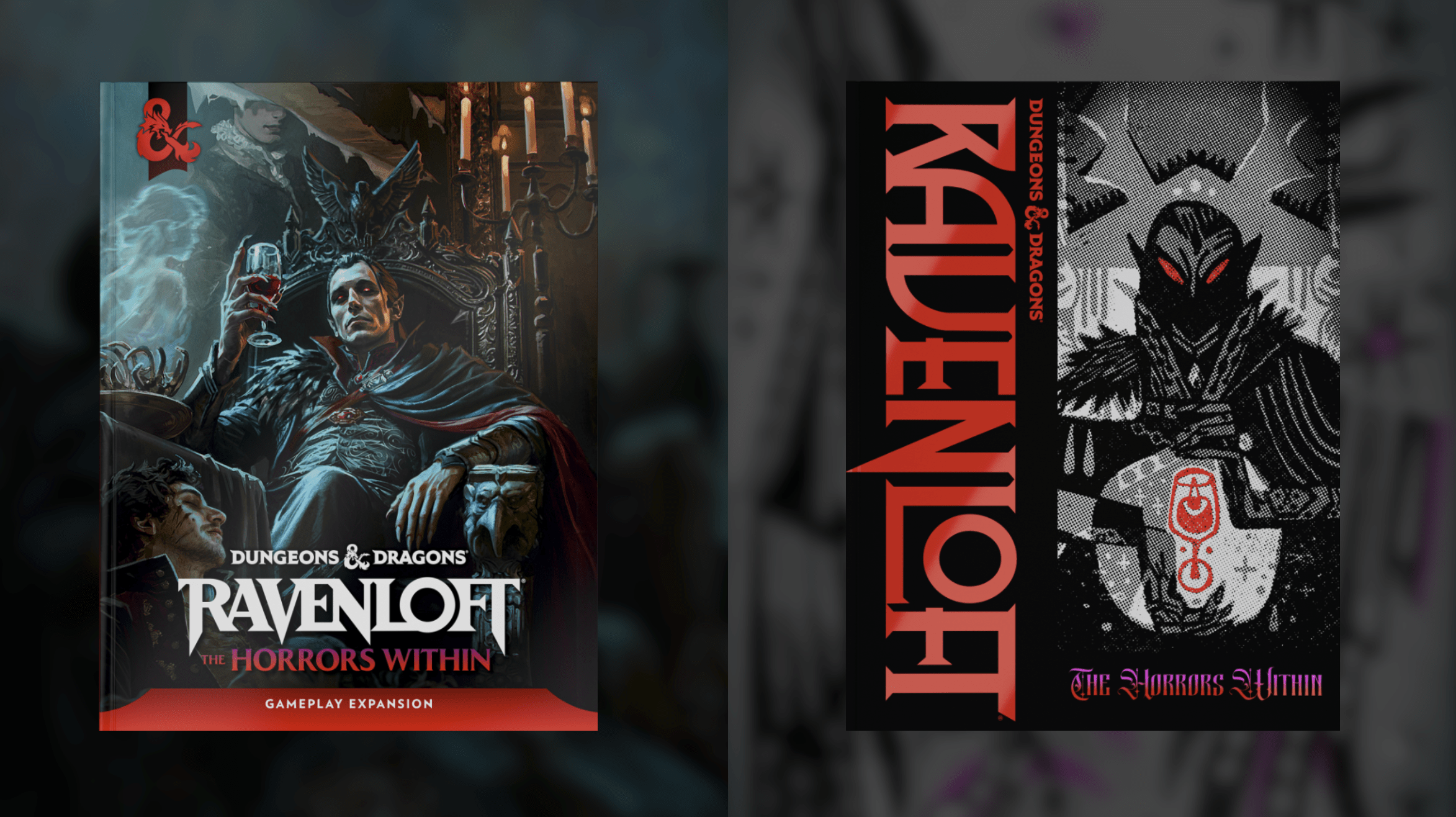
To be perfectly fair, the Standard Edition cover is actually a massive bright spot here. The standard cover featuring Strahd is excellent. The way they drew him—capturing his brooding, aristocratic menace alongside the dark, atmospheric framing of the rest of the piece—is exactly what a Ravenloft book should look like. It sets a high bar that the inside of the book completely fails to meet.
And don’t even get me started on the Alternative Art cover. Normally, I absolutely love the alt-covers and gladly pick them up for my collection, but this one is just horrible. I honestly have no idea what the design team was thinking. It looks less like professional dark fantasy art and more like a fourth-grader was daydreaming and doodling on the back of their notebook during class instead of doing their math homework. It is a massive disappointment for a premium product.
The Mechanical Meltdown: Utterly Fumbled Stat Blocks
For a book focused on legendary terrors, the actual mechanical design is shockingly weak. The developers attempted to stat out two of the most formidable entities in gaming history, and they fumbled both completely.
Strahd von Zarovich
The master of Barovia is stripped of his tactical brilliance here. Instead of a brilliant, centuries-old military commander and apex predator who uses the environment to hunt his prey, this version of Strahd feels like a generic, uninspired vampire sponge. His action economy is incredibly flawed, his legendary actions lack any real narrative flavor, and a semi-competent party could easily burst him down in two rounds. It completely robs the DM of the tools needed to run him as a psychological, terrifying mastermind.
Cthulhu
The inclusion of Great Old One stats should have been a monumental addition, but it is completely undermined by an underwhelming, poorly balanced design. The stat block entirely fails to capture the world-shattering cosmic dread he should command. Rather than introducing innovative madness mechanics or reality-warping regional effects that break the minds of mortals, Cthulhu is reduced to a Semi high-health brute (Which should have WAY MORE HEALTH in my opinion) with basic multi-attacks and a few high-level spells thrown in. It feels like the design team ran out of ideas and simply scaled up a generic giant monster.
The One Saving Grace: Masterful Domain Design
The absolute only bright point in this otherwise disappointing mist is the world-building toolkit. Even if much of it feels borrowed from Van Richten’s, the sections dedicated to the core lore and construction of the settings themselves remain genuinely fantastic.
The chapters focusing on the individual domains offer brilliant, evocative prose. They dive deep into the cultural dread, local superstitions, and psychological horror of each region, offering Dungeon Masters a treasure trove of genuine narrative inspiration and haunting hooks.
Even better is the step-by-step guide on creating your own domain of dread. This section is exceptionally well-written, offering a masterclass in horror world-building:
-
It breaks down how to identify a domain’s “Darklord” and tailor the surrounding geography to act as a direct, ironic psychological prison for them.
-
It provides concrete tables and conceptual frameworks for mapping out the precise cultural taboos, atmospheric details, and structural pacing required to sustain an ongoing horror campaign.
It is a phenomenal resource that gives DMs the exact creative freedom they want—it is just a shame you have to wade through a sea of purple and recycled ideas to find it.
The Verdict
If you don’t own Van Richten’s Guide to Ravenloft and you are strictly looking for an excellent guide to building homebrew horror realms, the back half of this book might justify the price of admission. However, if you already have the superior predecessor, or if you are picking this up expecting legendary, plug-and-play boss fights and striking gothic imagery, you are going to find yourself deeply disappointed.
Discover more from DDO Players
Subscribe to get the latest posts sent to your email.
Pingback: Shuffling Through the Purple Shadows of Regret: The Horrors Within Tarokka Deck Review – DDO Players