

Review Disclosure
A review code for Pool of Radiance: Ruins of Myth Drannor was provided by SNEG for the purpose of this review. No monetary compensation was received, and all opinions, criticisms, and conclusions expressed in this review are entirely my own. Receiving a review copy had no influence on the score or final verdict.
Platform Reviewed: PC (Steam/GOG)
Developer: Stormfront Studios (Original)
Publisher: SNEG
Released: November 6, 2026
A Worthy Restoration of a Flawed D&D Relic
Not every classic deserves a second chance. Some games are remembered fondly because nostalgia smooths over rough edges, while others become cautionary tales about ambition exceeding execution. Pool of Radiance: Ruins of Myth Drannor falls somewhere in the middle.
Originally released in 2001, the game attempted something incredibly ambitious: faithfully adapting Dungeons & Dragons 3rd Edition rules into a large-scale tactical CRPG. Unfortunately, technical issues, questionable design decisions, and stiff competition from genre titans prevented it from achieving the legendary status enjoyed by games like Baldur’s Gate II. Twenty-five years later, SNEG has resurrected the title, bringing it to modern storefronts for the first time with extensive compatibility and quality-of-life improvements.
The result is both a fascinating historical artifact and a reminder of how far CRPGs have evolved.
SNEG has successfully preserved an important piece of D&D gaming history, but no amount of polish can completely hide the fact that Ruins of Myth Drannor remains a brutally unforgiving, frequently frustrating dungeon crawler.
Preservation Done Right
Let’s start with what SNEG absolutely nailed.
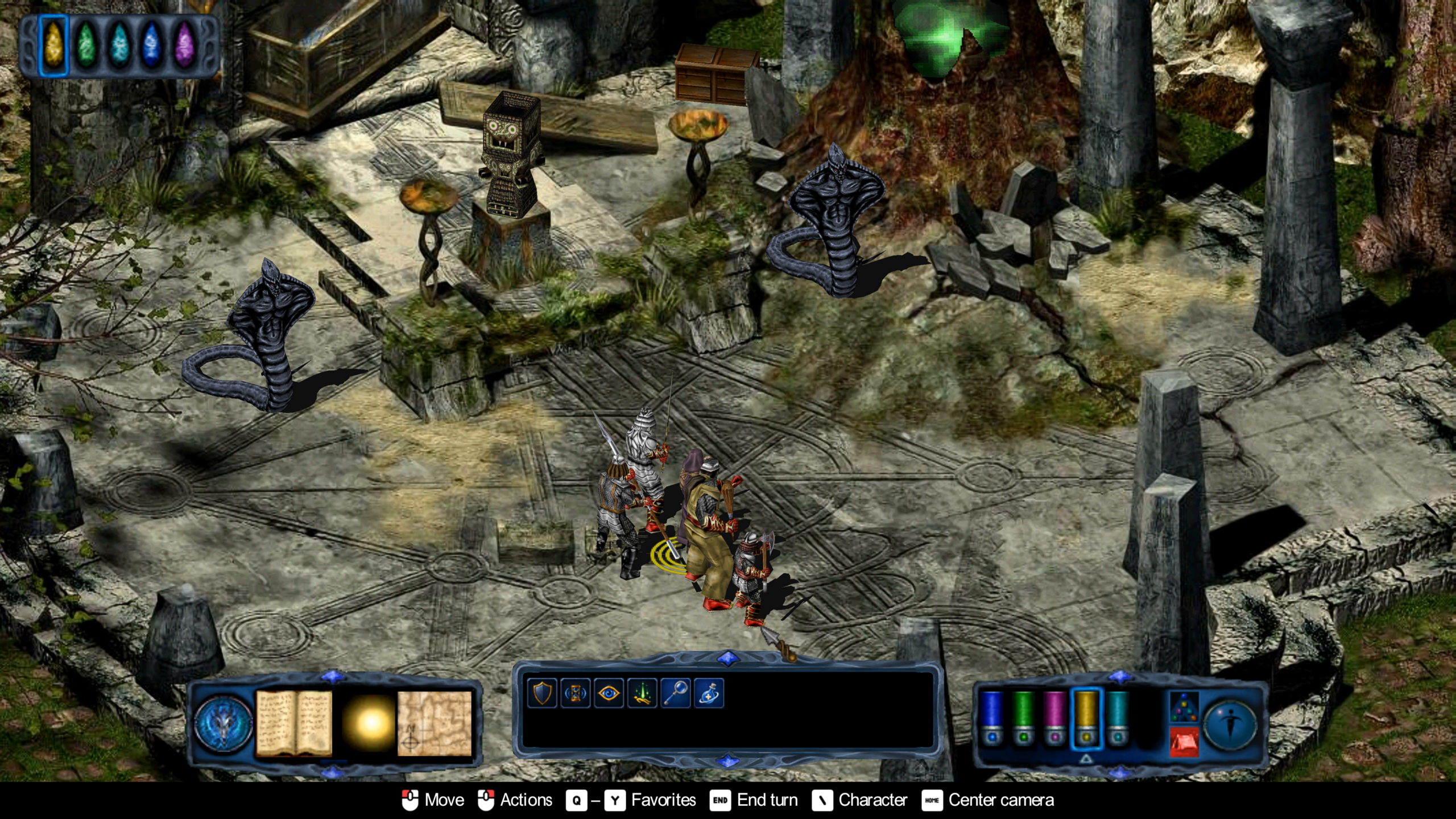
The original release was notorious for technical problems and compatibility headaches. The 2026 version solves most of these issues through a thoughtful restoration package that focuses on modern accessibility rather than rewriting history.
The re-release includes:
- Native widescreen support and 4K resolutions
- Improved UI elements
- Full controller support
- Adjustable combat animation speeds
- Reworked camera controls
- Legacy Mode for players seeking the original experience
- Improved modern hardware compatibility
- Numerous bug fixes and stability improvements
Perhaps the greatest compliment I can give this restoration is that it largely disappears into the background. The game runs smoothly, remains stable for extended sessions, and no longer feels like a battle against aging software.
For preservation enthusiasts, this release is a major success. Ruins of Myth Drannor is finally playable without wrestling with ancient operating systems or community patches.
A Snapshot of Early D&D 3rd Edition Gaming
One of the most interesting aspects of Ruins of Myth Drannor is how clearly it represents a transitional period for RPG design.
The game utilizes D&D 3rd Edition rules and allows players to create up to four custom characters while recruiting two companions for a full six-person adventuring party. Character classes, races, spells, and tactical positioning all play significant roles in combat.
For veteran tabletop players, much of the game’s appeal comes from watching these systems function in digital form.
- The foundation is solid.
- Party composition matters.
- Spell selection matters.
- Positioning matters.
Building a balanced group feels rewarding, especially when difficult encounters require careful planning rather than brute force.
Yet the adaptation is not without problems.
One of the strangest design decisions is how custom characters often feel disadvantaged compared to several pre-made party options. Some pre-generated heroes appear to possess stronger stat distributions than many custom builds can reasonably achieve.
Similarly, character progression lacks some of the freedom many D&D fans expect. Rather than allowing complete feat and skill customization throughout leveling, much of the development process follows predefined templates. This streamlines progression but sacrifices meaningful player agency.
For a game rooted in Dungeons & Dragons, that’s a surprisingly restrictive choice.
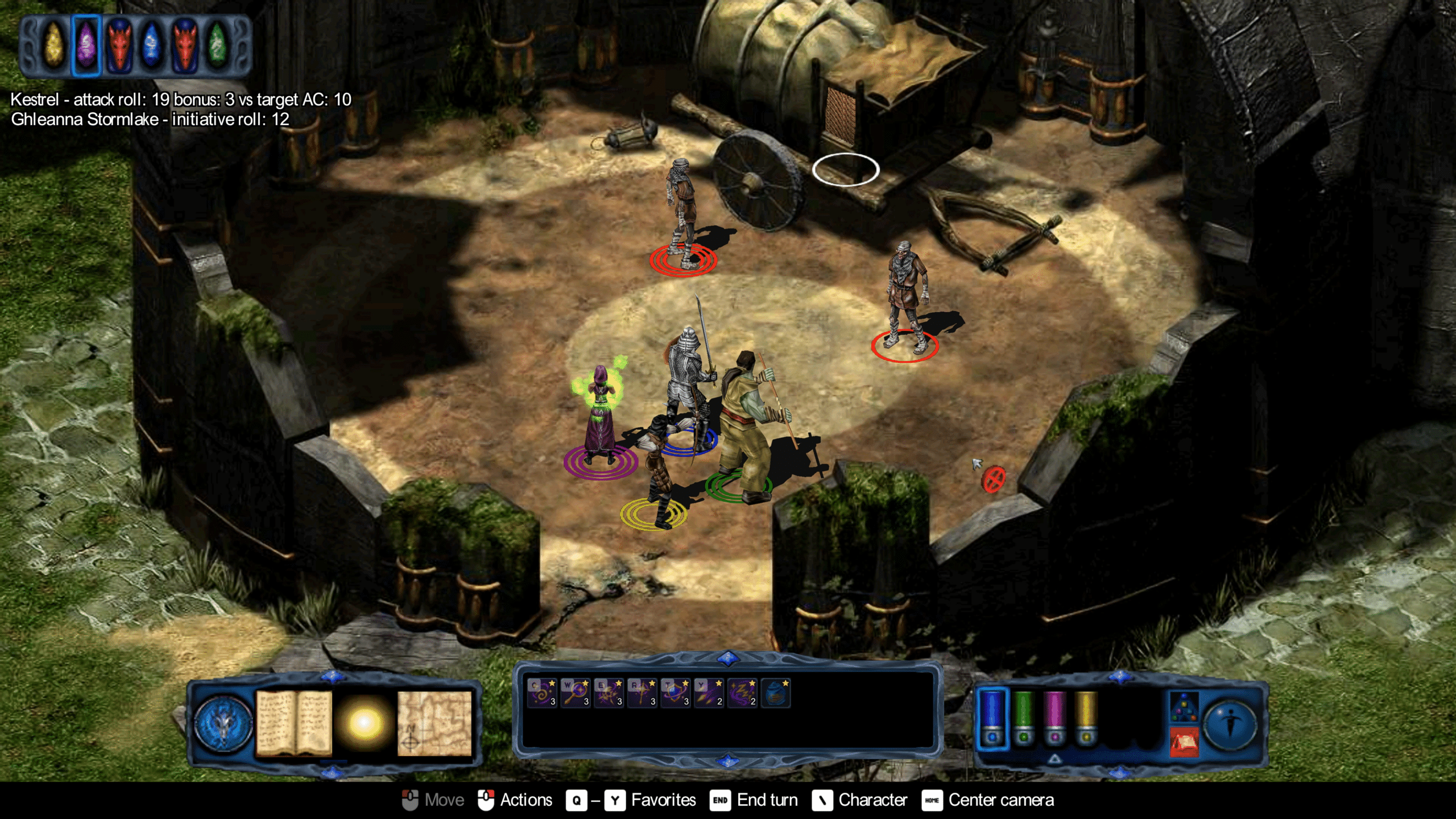
Myth Drannor: One Giant Dungeon
The story follows a familiar Forgotten Realms setup.
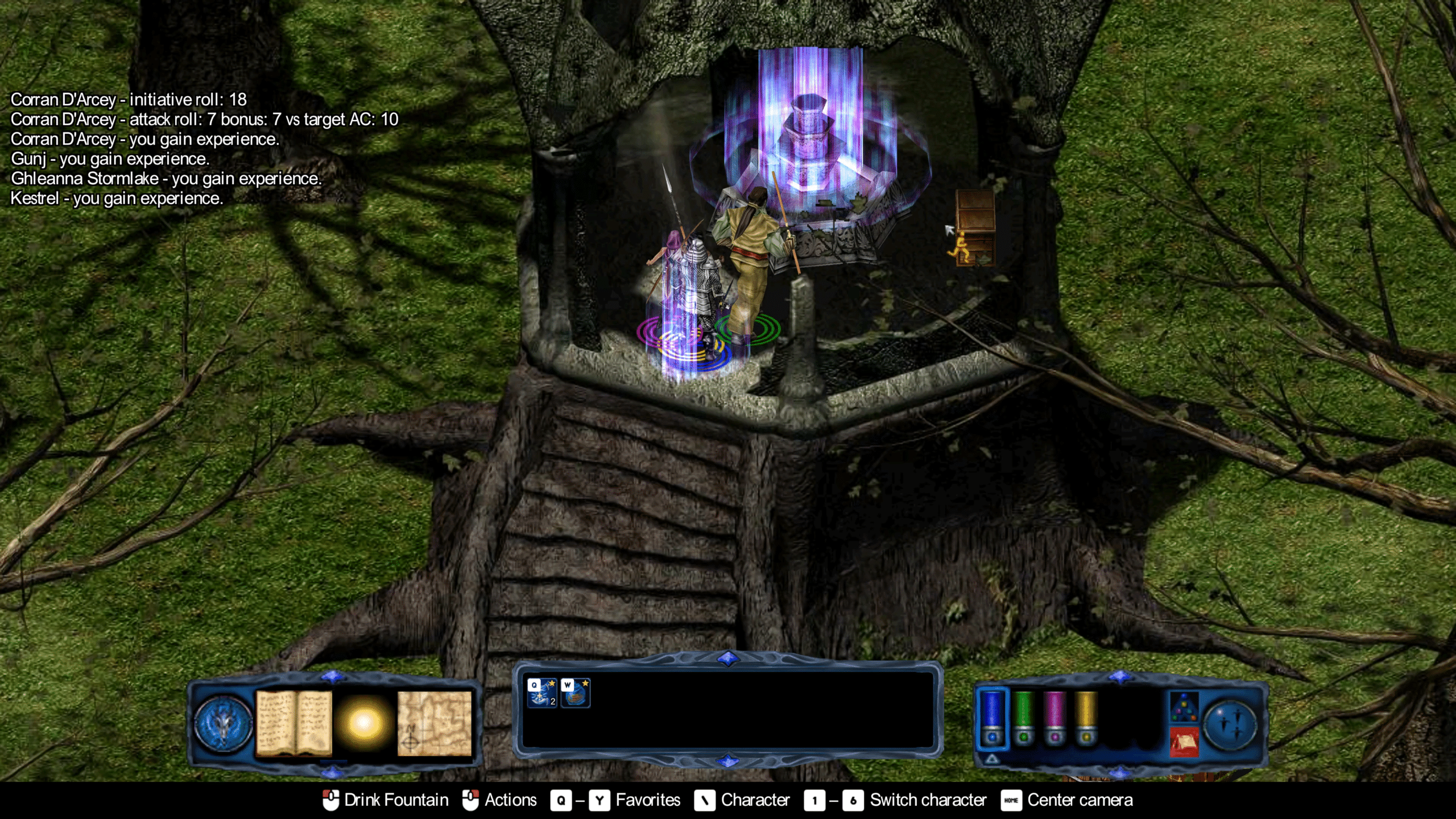
A newly discovered Pool of Radiance beneath New Phlan begins spreading corruption throughout Faerûn. Under the guidance of Elminster, your party ventures into the legendary ruins of Myth Drannor to stop a powerful sorceress and an ancient dracolich before disaster engulfs the realm.
The narrative works well enough.
The atmosphere is strong.
The Forgotten Realms setting remains compelling.
However, the story largely serves as a vehicle for what the game is truly interested in: dungeon crawling.
And there’s a lot of dungeon crawling.
Some players will love this.
Others may find it exhausting.
Myth Drannor often feels less like a traditional RPG campaign and more like a marathon of interconnected combat encounters punctuated by occasional narrative moments.
If your favorite part of D&D is exploring dangerous ruins and fighting monsters, you’ll probably be happy.
If you’re looking for rich companion writing, branching narratives, or extensive roleplaying opportunities, you’ll likely come away disappointed.
Combat: Deep, Demanding, and Occasionally Miserable
Combat remains the centerpiece of the experience.
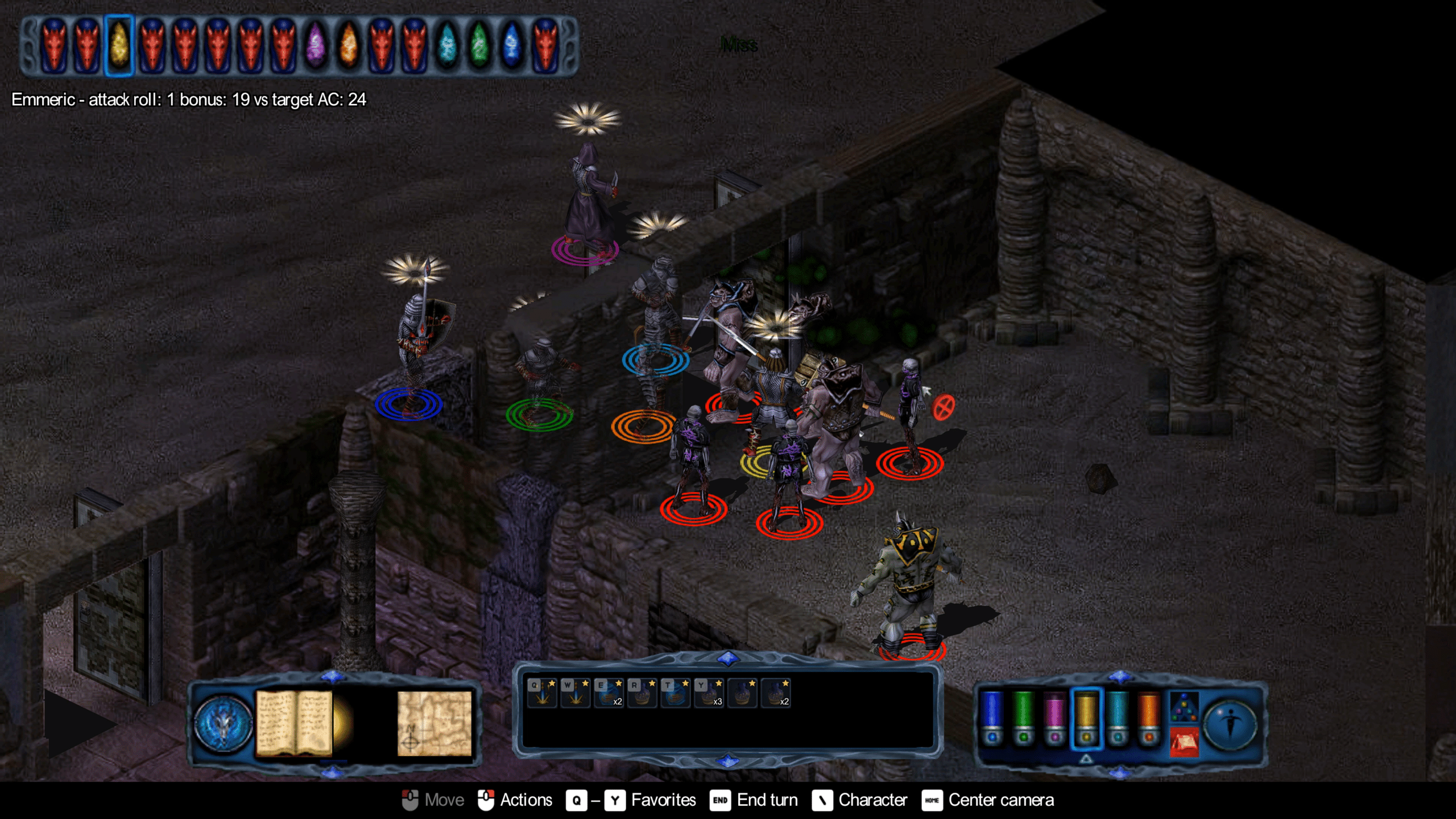
At its best, battles capture the tactical complexity that D&D fans crave. Managing spellcasters, coordinating melee fighters, controlling chokepoints, and timing abilities effectively can create genuinely satisfying victories.
Unfortunately, combat also represents the game’s greatest weakness.
Many encounters feel heavily inflated, throwing enormous numbers of enemies at the party simultaneously. Rather than creating meaningful tactical challenges, these fights often become lengthy endurance tests where the player’s action economy simply cannot keep pace with the opposition.
Several enemy types are particularly frustrating.
Early dungeon levels are packed with undead creatures capable of draining attributes or inflicting level loss. Shadows, Wraiths, and Specters frequently force excessive resting or repeated trips back to safety.
Elsewhere, enemy spellcasters and Orogs bombard the party with crowd-control effects such as Hold Person, leading to encounters where characters spend multiple turns unable to act.
These mechanics are faithful to old-school D&D in some respects, but they don’t always translate into enjoyable gameplay.
The challenge often feels less about strategy and more about surviving unfortunate dice rolls.
And because the game lacks some of the convenience features modern players expect, recovering from a disastrous battle can become an exercise in patience rather than skill.
UI Friction Still Exists
Although SNEG has significantly improved the interface, remnants of the original design remain difficult to ignore.
The UI feels more functional than elegant.
Inventory management can be cumbersome.
Equipment interactions rely heavily on drag-and-drop behavior that feels awkward compared to modern RPG standards.
Spell information is not always easily accessible during combat, forcing players to dig through menus to verify effects and damage values.
Navigation presents another recurring issue.
The camera improvements help, but limited zoom options still make it challenging to track enemies positioned at long distances. Occasionally, ranged attackers can engage the party from beyond the visible screen area.
Movement can also be unintentionally wasted through minor misclicks as exploration transitions into turn-based combat.
These annoyances aren’t game-breaking, but after dozens of hours, they begin to accumulate.
Why It Still Matters
What makes Pool of Radiance: Ruins of Myth Drannor interesting in 2026 isn’t necessarily that it’s a great game.
It’s that it’s an important one.
Playing it today feels like examining a missing link in CRPG evolution.
Many ideas that modern players take for granted were still being experimented with when Ruins of Myth Drannor was developed. You can see traces of systems and design philosophies that would eventually appear in games such as Neverwinter Nights, Pillars of Eternity, Pathfinder, and ultimately Baldur’s Gate 3.
The game frequently stumbles.
Sometimes badly.
But it also showcases the ambition that pushed the genre forward.
For CRPG historians, that alone makes it valuable.
Final Verdict
SNEG deserves tremendous credit for this restoration. The company has transformed an almost inaccessible relic into a stable, playable, and historically important release. The modern enhancements, bug fixes, and compatibility improvements make this the definitive way to experience Pool of Radiance: Ruins of Myth Drannor.
Unfortunately, preservation can only do so much.
Beneath the improvements lies a game that still struggles with encounter balance, pacing issues, cumbersome interface design, and a dungeon-crawling structure that can feel relentlessly repetitive.
For hardcore D&D fans, CRPG historians, and genre completionists, this release is absolutely worth exploring.
For newcomers raised on modern RPG design, it may feel less like uncovering a hidden gem and more like excavating a fascinating fossil.
Pool of Radiance: Ruins of Myth Drannor isn’t a masterpiece rediscovered.
It’s a flawed but important chapter in RPG history finally receiving the preservation treatment it always deserved.
Recommended For:
- CRPG historians
- Dungeons & Dragons enthusiasts
- Fans of old-school tactical dungeon crawlers
- Players interested in RPG preservation
Not Recommended For:
- Casual RPG players
- Those expecting a Baldur’s Gate 3-like experience
- Players sensitive to repetitive dungeon design
- Anyone seeking modern quality-of-life conveniences and narrative depth
You can buy it via Steam right now.
Discover more from DDO Players
Subscribe to get the latest posts sent to your email.