

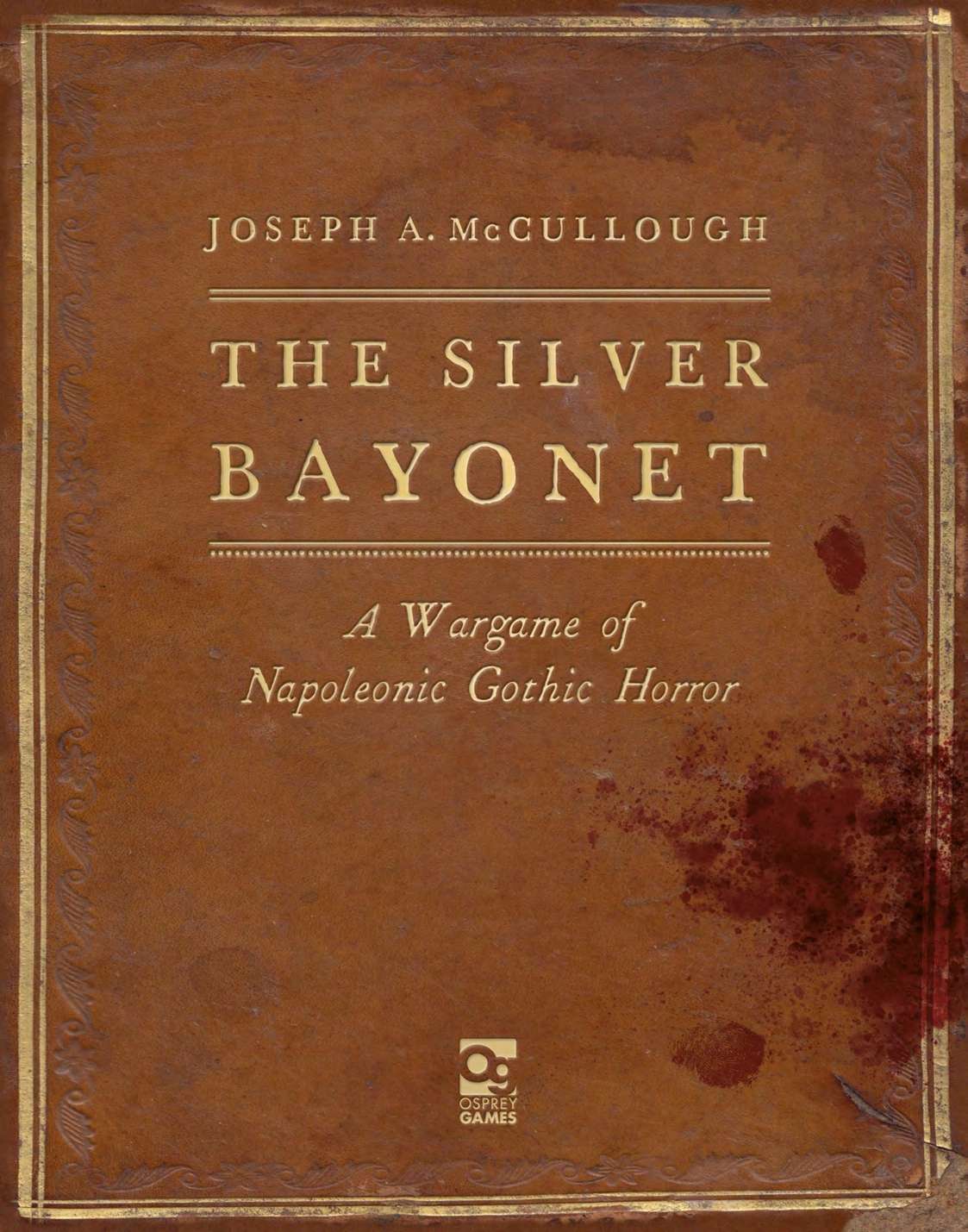
The Silver Bayonet is a skirmish wargame that trades the rigid formation drills of traditional Napoleonic gaming for the fog-shrouded, monster-infested forests of Gothic horror. Published by Osprey Games and designed by Joseph A. McCullough (the creator of Frostgrave), it offers a “Hollywood over History” take on the 19th century that feels like Sharpe meets Van Helsing.
The Setting: A War on Two Fronts
The game takes place during the Napoleonic Wars, but with a dark twist. The massive scale of death and suffering on the battlefields of Europe has thinned the veil between worlds, allowing supernatural entities known as The Harvestmen to bleed into reality.
While the Great Powers (Britain, France, Prussia, Russia, etc.) continue to fight for territory, they have also formed secret, elite units of “specialists” to hunt down vampires, werewolves, and ghouls. As a player, you lead one of these units, navigating a landscape where the enemy soldier in the distance might be less dangerous than the thing lurking in the woods behind you.
Core Gameplay Mechanics
The system is built for speed and narrative tension, utilizing a 2d10 system that differs from McCullough’s previous d20-based games.
-
The Power and Finesse Dice: When you attack, you roll two differently colored d10s (e.g., Red for Power, Blue for Finesse). Both are added to your skill modifier to determine if you hit. If successful, the value of a specific die determines the damage: heavy weapons (like muskets) use the Power die, while precise weapons (like rifles or rapiers) use the Finesse die.
-
Fate Pool: Players have a limited pool of Fate Dice each game. These allow you to reroll specific types of dice or—most interestingly—manipulate the monsters on the board, potentially forcing a werewolf to turn its attention toward your opponent’s soldiers instead of your own.
-
The Monster Phase: Monsters are controlled by simple AI “scripts.” They act in their own phase between player turns, ensuring that both players are often forced into an uneasy, temporary truce to survive a sudden supernatural onslaught.
Part of the charm of The Silver Bayonet is its “Monster Phase,” which ensures that even in a competitive game, both players are constantly harassed by the environment. Here is a breakdown of the horrors you’ll face and the landscape you’ll need to build to survive them.
The Bestiary: What Lurks in the Shadows
The core rulebook features a diverse bestiary, while expansions like The Carpathians and Egypt add regional terrors. Monsters generally fall into three categories:
1. The Classic Undead & Shapeshifters
-
Vampires: The “boss” encounters. They are fast, hypnotic, and incredibly hard to kill without silver or faith-based attacks.
-
Werewolves: Brutal melee combatants that can regenerate health. They often move faster than your soldiers can run.
-
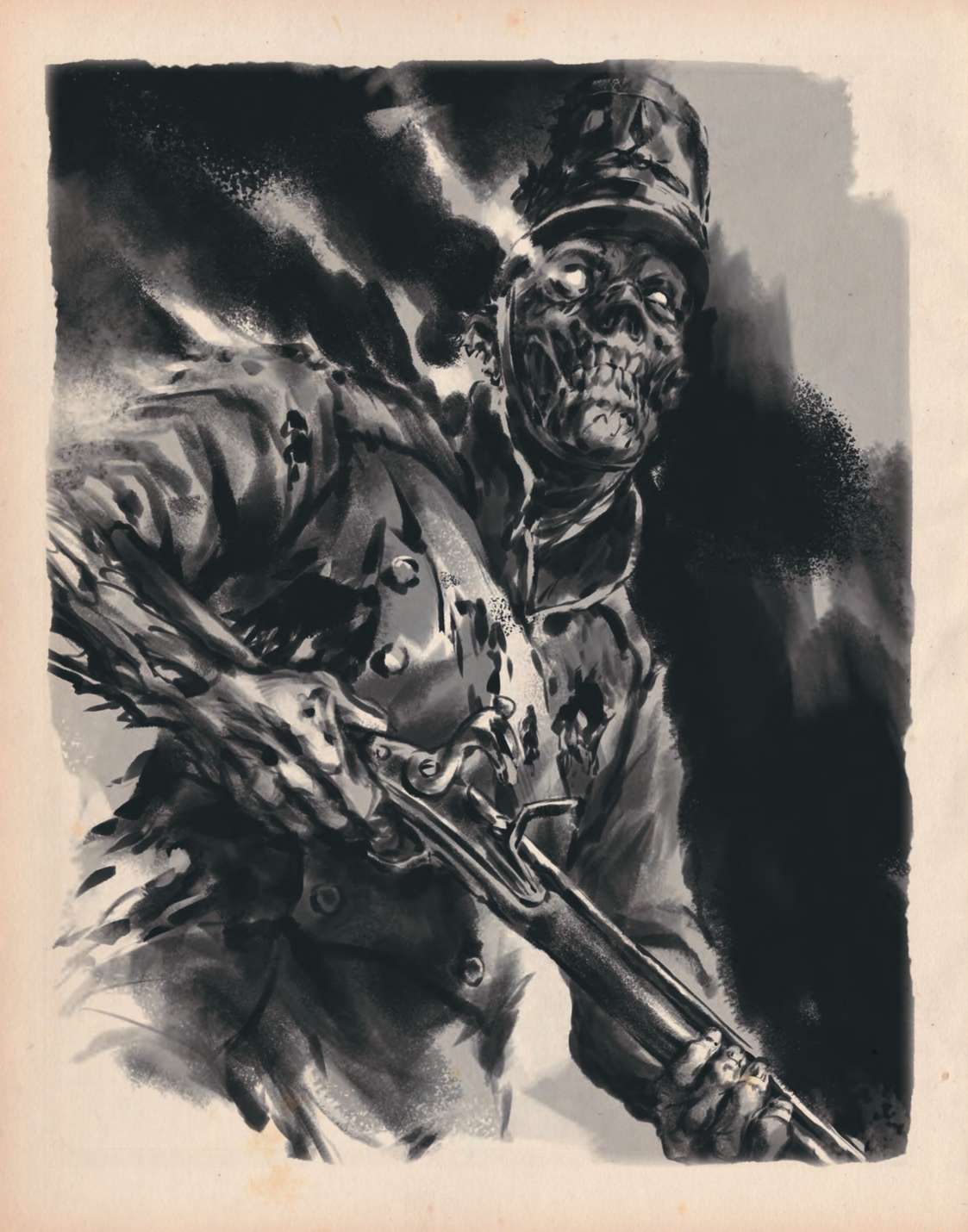
Revenants: The Napoleonic equivalent of zombies—fallen soldiers or peasants who refuse to stay buried. They are slow but relentless.
-
Ghouls: Scavengers that haunt battlefields, often attacking in groups to overwhelm isolated specialists.
2. Mythological & Folk Horrors
-
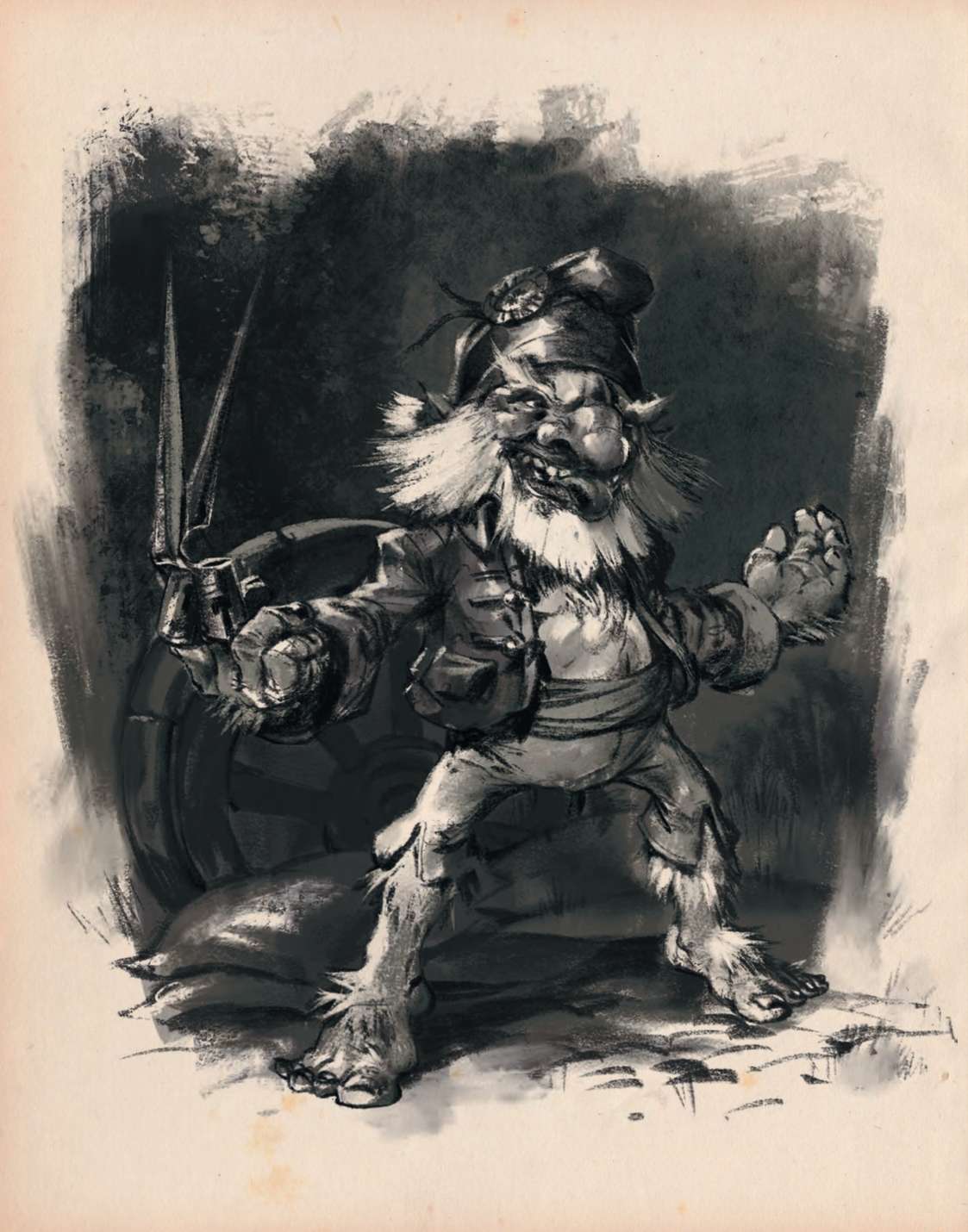
Goblins & Hobgoblins: Not your typical high-fantasy variety; these are twisted, spiteful creatures of the deep woods.
-
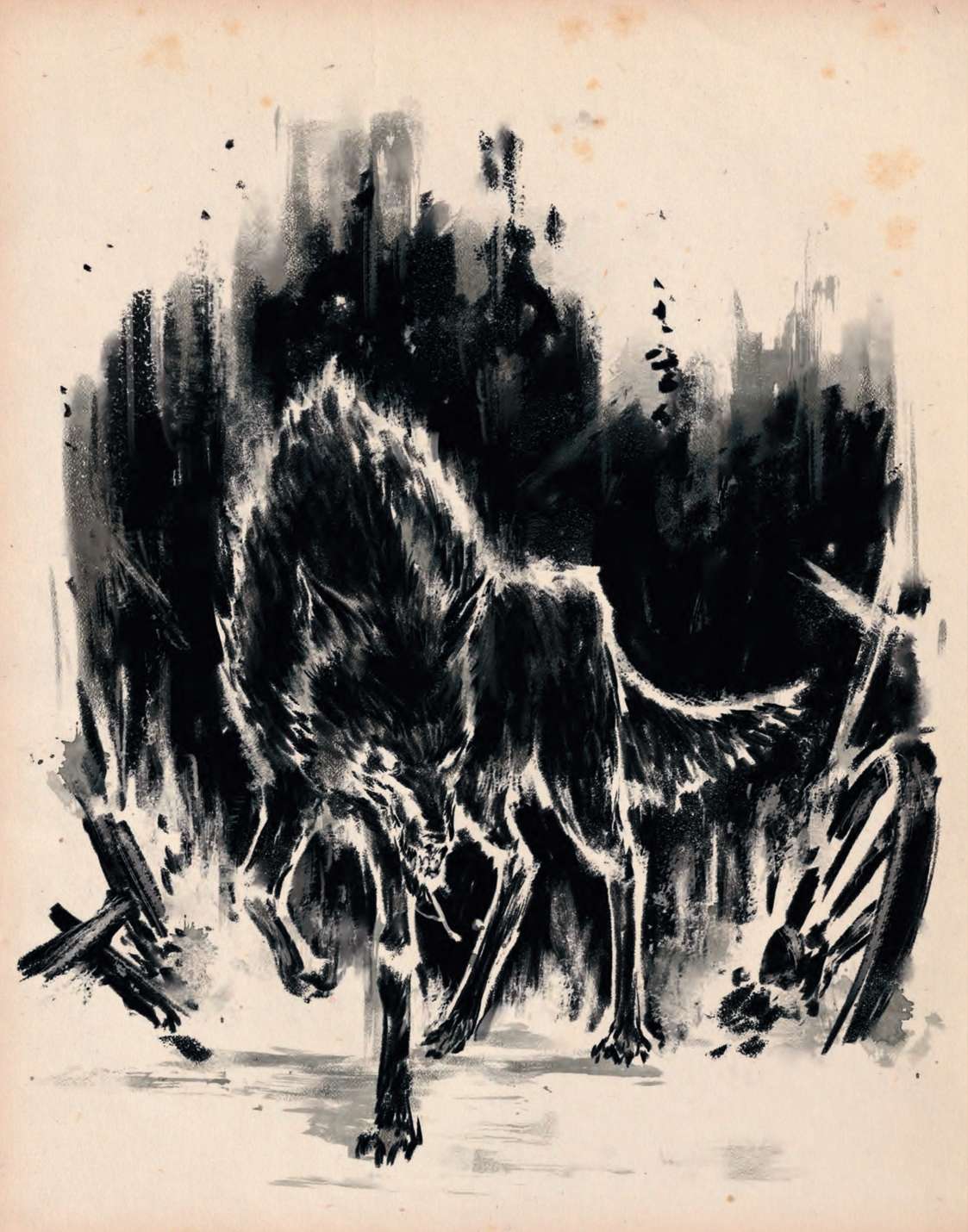
The Black Dog: A spectral omen of death that is difficult to hit with conventional musketry.
-
Living Scarecrows: Construct-like entities that guard desolate farms, possessing surprisingly high defense.
-
Ghosts: Ethereal threats that ignore physical obstacles and can chill a soldier’s heart, causing courage tests.
3. Human Threats
-
Cultists: Fanatics who serve the Harvestmen, often acting as “fodder” but dangerous when grouped.
-
Bandits: Deserters and criminals who are just as well-armed as your unit but lack your discipline.
Terrain Requirements: Building the “Gothic” Table
The game is typically played on a 3′ x 3′ or 2.5′ x 2.5′ table. Because muskets and rifles are deadly, the board must be densely packed with “scatter” terrain to block line of sight.
Essential Scenery Pieces
-
The Dark Forest: You will need plenty of individual trees or small wooded copses. These provide “Soft Cover” and act as spawning points for monsters.
-
Rural Structures: Abandoned farmhouses, stone cottages, or a ruined chapel. These serve as excellent vantage points and objective locations.
-
Stone Walls and Fences: These are vital for the “Duck Back” mechanic, allowing your soldiers to seek cover after firing.
-
The Graveyard: A staple of the genre. Low walls, gravestones, and perhaps a small mausoleum create a perfect atmospheric center-piece.
-
Water Features: Small ponds, marshy bogs, or a narrow stream with a stone bridge.
Aesthetic Tips
To capture the Silver Bayonet look, aim for a muted, grimy palette. Think “Mud and Blood.”
-
Scatter Terrain: Add crates, barrels, and overturned wagons to represent the detritus of a retreating army.
-
Clue Markers: You’ll need 2–4 “Clue Markers” per game. These can be represented by anything from a pile of discarded equipment to a mysterious glowing relic or a slumped messenger.
Warband Construction
You don’t need hundreds of models to play. A standard unit consists of an Officer and roughly seven specialists. You can choose from historical archetypes or more “Gothic” additions:
-
Historical: Riflemen, Infantrymen, Sappers, and Highlanders.
-
Gothic: Occultists, Supernatural Investigators, and Champions of Faith.
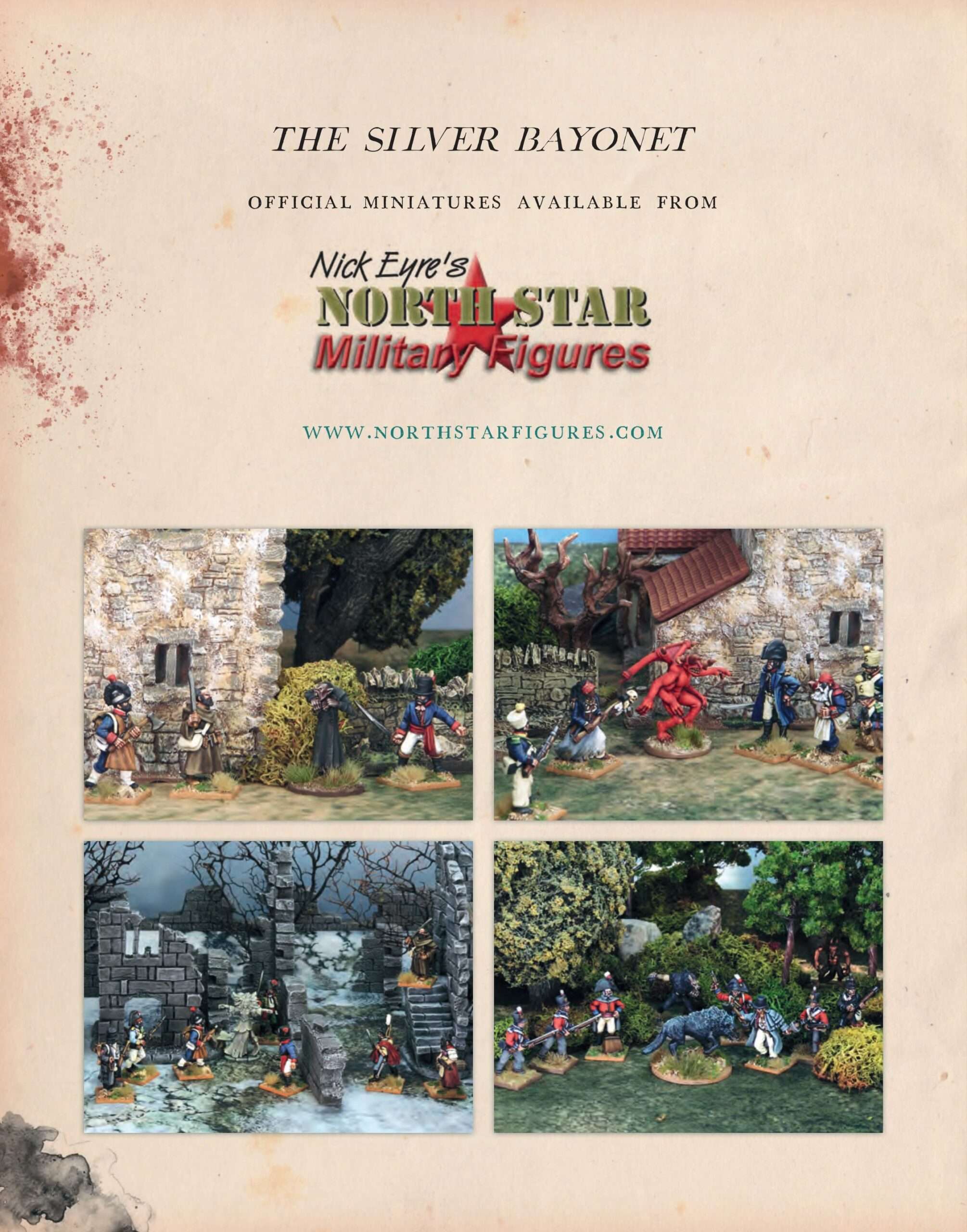
The game is miniature-agnostic, meaning while there is an official line of figures from North Star Military Figures, you can use any 28mm Napoleonic or horror miniatures you already own.
Why It’s Worth Playing
| Feature | Benefit |
| Small Scale | Requires only 8–10 models and a 2.5′ x 2.5′ or 3′ x 3′ table. |
| Versatility | Includes robust rules for Competitive, Cooperative, and Solo play. |
| Campaign Depth | Soldiers gain experience, find artifacts, or suffer permanent “lingering injuries” (both physical and mental). |
| Atmosphere | The rulebook is designed to look like a weathered 19th-century journal, complete with sketches and “bloodstains.” |
Potential Drawbacks
-
High Randomness: Like Frostgrave, the swing of the dice can be brutal. A legendary officer can be taken down by a lucky ghoul if the rolls go south.
-
Historical Accuracy: Purists may be annoyed by the “Hollywood” equipment and the lack of strict formation rules, though the game explicitly states it prioritizes flavor over realism.
Final Verdict
The Silver Bayonet is an excellent “bridge” game. It’s perfect for historical gamers looking for a narrative break, or fantasy gamers who want to dip their toes into the aesthetic of the Napoleonic era without painting 200 identical line infantry. It shines best in Campaign Mode, where the story of your unit’s survival (or tragic demise) unfolds over several games.
Discover more from DDO Players
Subscribe to get the latest posts sent to your email.

Pingback: DDO Players News Episode 365 The One With Producer’s Letter And Demogorgon – DDO Players